

Missing a Tooth? Bridges vs Implants Explained
If you need to replace a missing tooth, you’re probably weighing up bridges vs implants. The three main fixed options are a dental implant, a resin-bonded bridge or a conventional bridge. All can look natural and last many years. This guide explains the differences, based on UK guidance and published research. At Torrington Dental Practice, we’ll talk you through which option suits your mouth.
Why replace a missing tooth?
A gap can cause more problems than you might expect. Over time it can lead to:
- Neighbouring teeth drifting out of position
- Changes to your bite and difficulty chewing
- Extra pressure on the remaining teeth
- Gradual shrinking of the jawbone under the gap
Replacing the tooth helps keep your mouth healthy and stable, as well as restoring your smile.
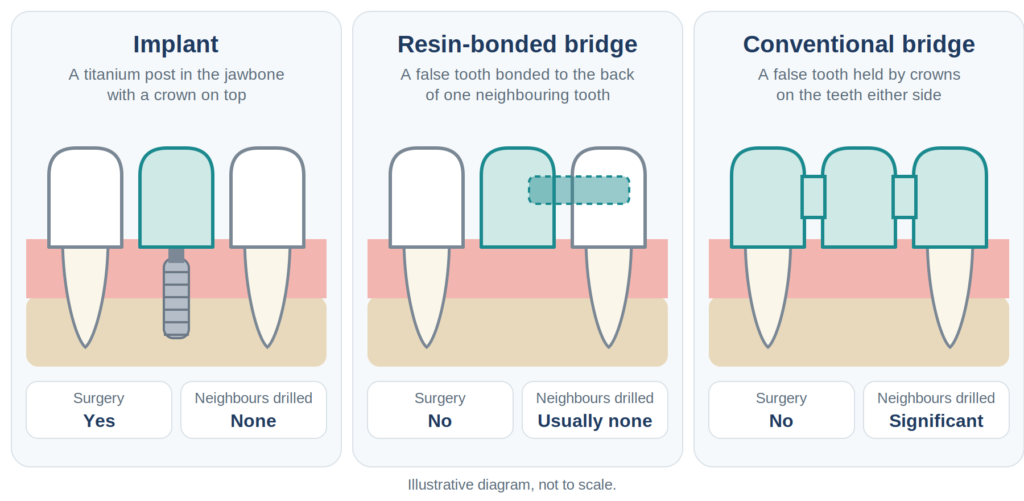
Bridges vs implants at a glance
| Option | How it works | Drilling of neighbouring teeth | Surgery | How long it lasts |
| Implant | A titanium post in the jawbone with a crown on top | None | Yes | 92–98% success; crown may need replacing after 10–15 years |
| Resin-bonded bridge | A false tooth bonded to the back of one neighbouring tooth | Usually none | No | About 8 in 10 still working after 10 years |
| Conventional bridge | A false tooth held by crowns on the teeth either side | Significant | No | Long-lasting if the supporting teeth stay healthy |
Whichever you choose, good daily cleaning and regular check-ups make the biggest difference to how long it lasts.

Things to consider
- It involves minor surgery and a few months of healing.
- It usually costs the most upfront.
- Regular hygienist visits are essential. Plaque build-up can cause gum inflammation around the implant (peri-implantitis), which can lead to bone loss.
- Small parts, such as screws or porcelain, occasionally need repair.
Who may not be suitable: smokers (including e-cigarette users), people with uncontrolled gum disease or diabetes, heavy tooth grinders, and under-18s whose jaw is still growing. Gum disease that has been treated and is stable doesn’t rule you out.

Things to consider
- Your neighbouring teeth are drilled down. A crown preparation removes around 63–72% of the visible tooth, and this can’t be undone.
- The nerve of a supporting tooth can die. This happens in about 1 in 11 teeth after crown preparation, and is more likely under bridges. The tooth would then need root canal treatment. UK guidance notes this is sometimes planned in advance, with your consent.
- Hidden decay. If the cement seal fails, decay can spread quickly under the bridge without you noticing.
- A failed bridge can mean losing a supporting tooth. This leaves a bigger gap, which is more complex and costly to fix.
- The jawbone under the gap isn’t supported. A bridge sits over the gap rather than replacing the tooth root, so the bone underneath can gradually shrink.
The British Society for Restorative Dentistry advises keeping bridge designs as simple as possible and considering implants as an alternative.

Resin-bonded bridges
A false tooth attached to a thin wing, which is bonded to the back of one neighbouring tooth. Also called an adhesive or Maryland bridge.
Best for: a single missing front tooth with healthy neighbours, and younger patients.
Benefits
- Usually no drilling at all. Only rarely is a tiny amount of enamel adjusted.
- No surgery, and usually done in two or three visits.
- Can be used before the jaw has finished growing.
- Keeps your future options open, including an implant later.
- Usually costs less than an implant.
- Well proven: a large UK study found about 8 in 10 still working after 10 years, with most problems happening early on.
Things to consider
- It can come unstuck, but can usually be re-bonded.
- The porcelain can occasionally chip.
- On thin front teeth, a metal wing can sometimes show through as a slight grey tint.
- It’s less suited to back teeth, larger gaps, heavy biting or grinding, or a neighbouring tooth that is small, weak or heavily filled.
What about cost?
An implant usually costs more upfront, but research suggests the long-term costs of implants and bridges can be similar. We’ll always give you a clear written plan and cost breakdown, including ongoing maintenance, before you decide. For more on what affects the price of an implant, see our guide to how much a dental implant costs in the UK, and for our other options see our restorative dental treatments.
Bridges vs implants: which is right for me?
- An implant if your neighbouring teeth and gums are healthy, you don’t smoke, and you’ll keep up regular maintenance.
- A resin-bonded bridge for a single missing front tooth, especially if you’re younger or want to avoid surgery.
- A conventional bridge if your neighbouring teeth already need crowns, or implants aren’t suitable.
The best choice depends on your mouth. We’ll examine your teeth, gums and bone and talk you through the options.
Frequently asked questions
Are implants better than bridges?
Not always. Implants are the longest-lasting option and leave neighbouring teeth untouched, but they need healthy gums, enough bone and a commitment to regular maintenance. A bridge can be the better choice if your neighbouring teeth already need crowns, if you’d rather avoid surgery, or if implants aren’t suitable. A resin-bonded bridge can also be a good option for a single front tooth.
How long do implants and bridges last?
Implants have a reported success rate of 92–98%, though the crown may need replacing after 10–15 years. About 8 in 10 resin-bonded bridges are still working after 10 years. A conventional bridge can last many years as long as the supporting teeth stay healthy.
Will a bridge be noticeable?
Bridges are made to blend in with your natural teeth. On thin front teeth, the metal wing of a resin-bonded bridge can occasionally show through as a slight grey tint, which is something we can discuss with you at your consultation.
Is treatment painful?
Implant surgery and conventional bridge preparation are normally carried out under local anaesthetic. A resin-bonded bridge usually involves little or no drilling, so it is often the gentlest option. We will talk you through what to expect before you start.
Which is more affordable?
An implant usually costs more upfront, while bridges (especially resin-bonded ones) usually cost less to begin with. Over the long term the total costs can be similar, so we give you a full written breakdown before you decide. See our implant cost guide for more detail.
Book a consultation at Torrington Dental Practice to discuss your options with our team.